Herstellung
Verfahren
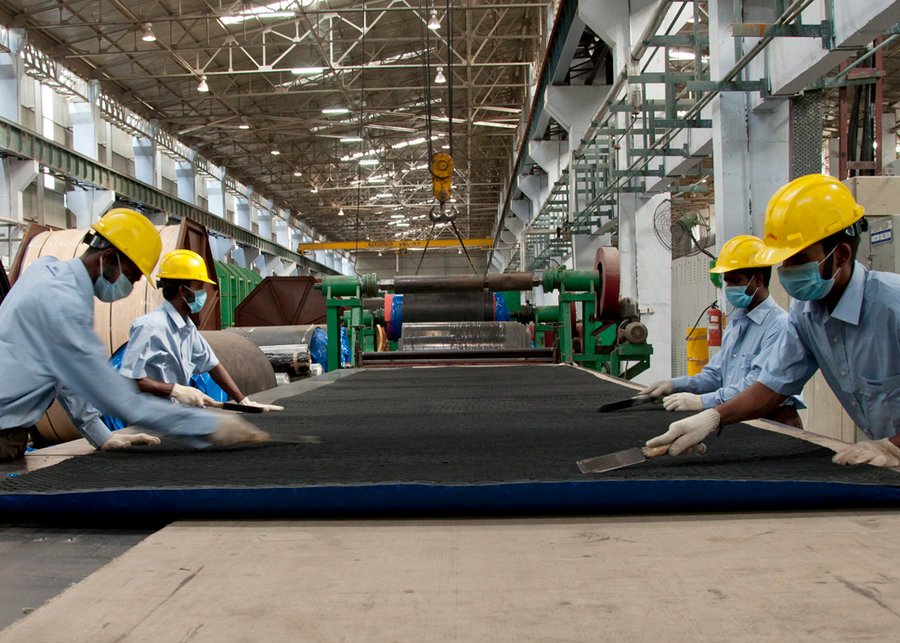
Fünf verschiedene Prozesse: Mischen, Kalandrieren/Plattieren, Laminieren, Aushärten und Endproduktprüfung & Verpackung
Mischen
Unterschiedliche Anwendungsbereiche von Verbundwerkstoffen erfordern eine individuelle Mischung der Verbundwerkstoffe.
Forech prüft regelmäßig verschiedene Rohstoffe auf ihre Eignung für die Kundenbedürfnisse und passt Mischverfahren und Rezeptur individuell an die jeweiligen Anwendungsanforderungen an. Aus Labor- und Produktionsversuchen werden das optimale Rohstoffverhältnis, die Mischzeit und die einzelnen Schritte ermittelt.
Die automatisierten Mischanlagen gewährleisten, dass der eigentliche Mischprozess nicht vom Rezept abweicht.
Jede aus dem Mischer kommende Charge wird mit einer Chargennummer versehen und im Labor getestet, bevor sie zur Weiterverarbeitung freigegeben wird.
Kalandrieren / Blechen
Die aus unserer Mischanlage stammende Masse liegt in dicken Platten geringer Breite vor. Um sie auf die gewünschte Breite und Dicke zu bringen und gegebenenfalls auf Stoff aufzutragen, wird sie entweder durch einen Kalander oder einen Extruder geleitet.
Die Plattenfertigungsanlagen steuern und regulieren Temperatur, Geschwindigkeit und Materialstärke, um eine gleichmäßige Dicke der fertigen Platte oder des gummierten Gewebes ohne freie Stellen zu gewährleisten. Bei jeder Einrichtung überprüft ein Anlagenwart zudem Breite und Dicke, um Abweichungen auszuschließen.
Forech ist außerdem in der Lage, Deckgummi in einer Dicke von bis zu 8 mm in einem einzigen Arbeitsgang herzustellen, wodurch das Risiko der Blasenbildung oder Delamination während des Betriebs verringert wird.
Laminieren
Für Textilgürtel nehmen wir einzelne Rollen gummierten Gewebes, legen sie auf einen Bautisch und schichten sie übereinander. Anschließend üben wir leichten Druck aus, um die Karkasse des Textilgürtels zu formen.
Die obere und untere Abdeckung werden in dieser Maschine ebenfalls auf den Geweberahmen aufgelegt. Der Montagetisch dient gleichzeitig dazu, sehr dicke Gummiabdeckungen oder Gummiauskleidungsplatten aus dünneren, vom Kalander kommenden Platten zusammenzusetzen. Unterbrecher, Sensorschleifen oder sonstige Ergänzungen der Abdeckung werden in diesem Fertigungsschritt ebenfalls in das Förderband integriert.
Bei Stahlseilbändern erfolgt die Laminierung inline in einer Verdichtungsstation, die Gummi auf die Ober- und Unterseite der unter Spannung stehenden Stahlseile aufbringt.
Die Formteile werden direkt in der Form zusammengebaut.
Aushärtung
Nach der Montage wird das zusammengebaute Blech, Förderband oder Formteil zu einer Rotationsfräse oder Presse gebracht.
Durch die Anwendung von Hitze und Druck wird sichergestellt, dass der Rohkautschuk eine Vulkanisationsreaktion durchläuft und seine endgültige Form annimmt.
Forech verfügt über spezialisierte Pressen und Formen, die auf Produkt, Dicke, Breite und Form für seine verschiedenen Produktlinien abgestimmt sind, darunter Gummiplatten, profilierte Gummibeläge, flache Förderbänder, profilierte Förderbänder, Keramikbeläge und -polster, Seitenwände und Stollen sowie Tragringe.
Auf jeder Produktionslinie werden Aushärtungszeit, Temperatur und Druck überwacht und gesteuert, um eine optimale Oberflächengüte und ein fehlerfreies Produkt zu gewährleisten.
Inspektion & Verpackung
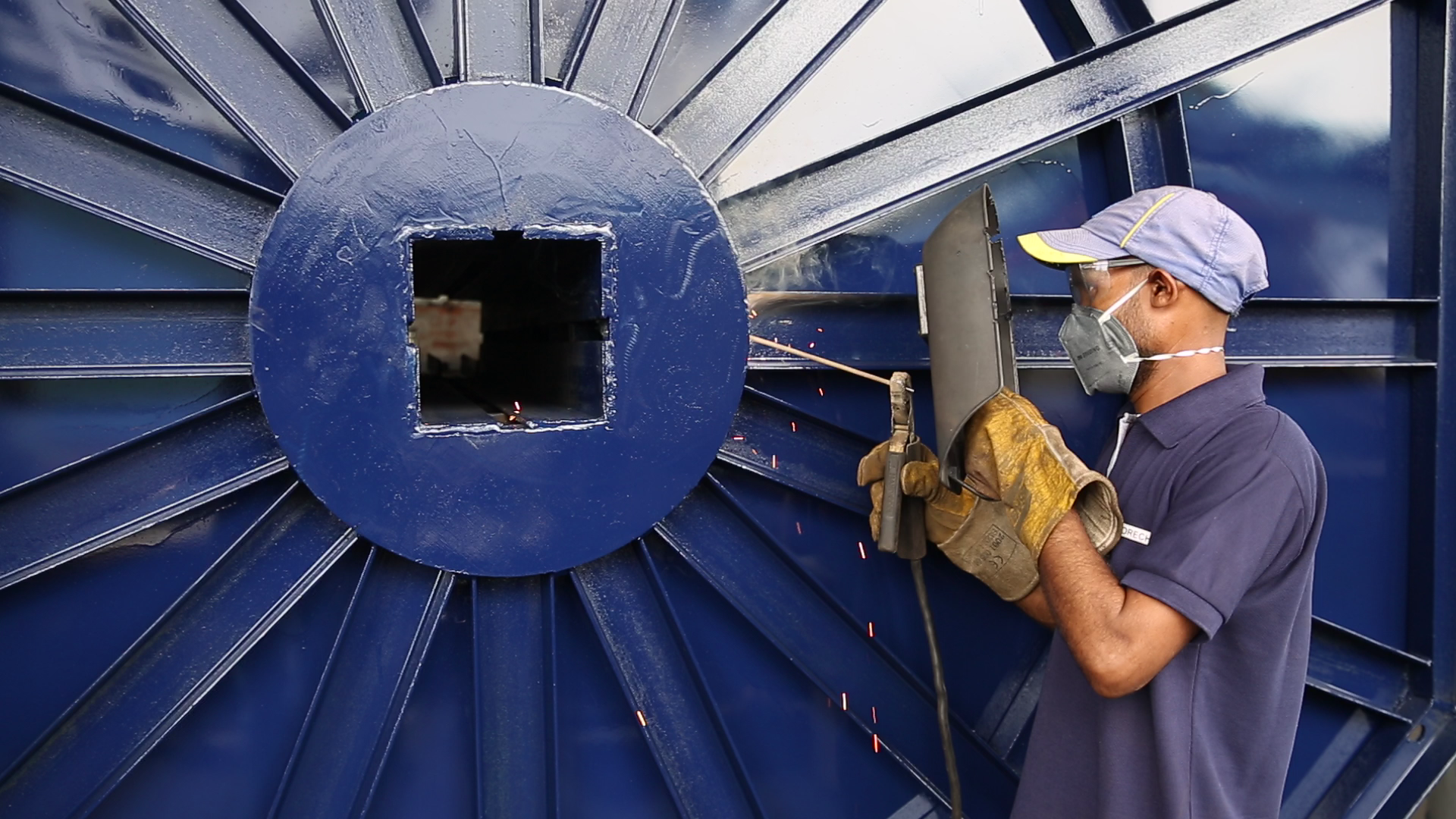
Nach Abschluss des Aushärtungsprozesses werden die fertigen Produkte zugeschnitten und beschnitten, um unerwünschte Gummireste zu entfernen; anschließend wird das fertige Produkt in unserem national zertifizierten Labor getestet.
Forech ist in der Lage, je nach Kunden- und Produktanforderungen die Festigkeit und Abriebfestigkeit des Gummis, die Festigkeit des gesamten Riemens, die Feuerbeständigkeit, die Hitzebeständigkeit sowie die Maßhaltigkeit zu prüfen.
Bei Bedarf fertigt Forech auch vor Ort maßgeschneiderte Verpackungsfässer, Käfige oder Kisten für das fertige Produkt an, um sicherzustellen, dass Ihr Produkt während des Transports vor Beschädigungen geschützt ist und sich möglichst leicht entladen lässt.