
Fabrication
Processus
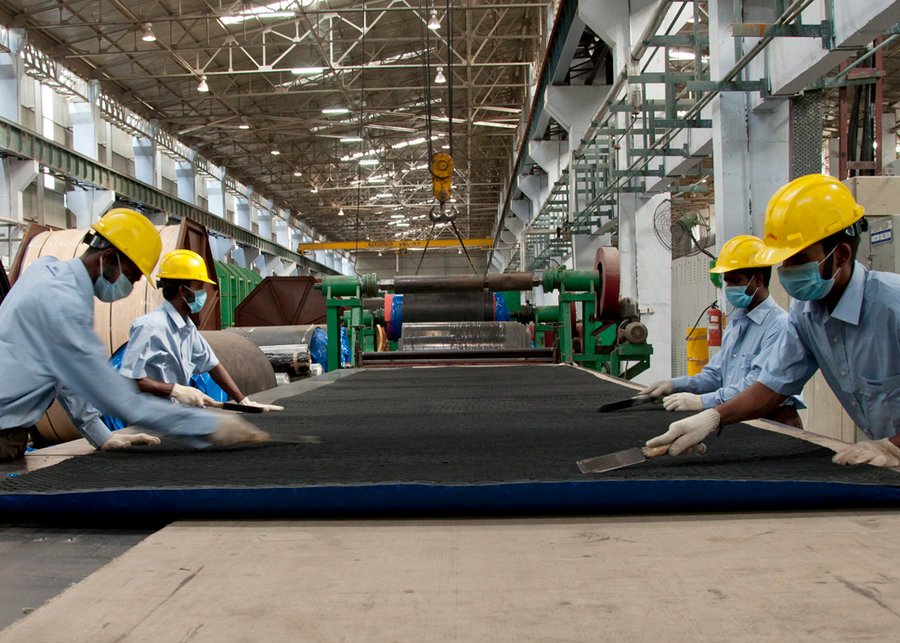
Cinq procédés distincts : mélange, calandrage/découpe en feuilles, laminage, durcissement, inspection et emballage du produit fini.
Mélange
Différentes applications de composés nécessitent un mélange de composés personnalisé.
Forech teste régulièrement diverses matières premières afin de vérifier leur adéquation aux besoins de ses clients et personnalise le procédé de mélange et la recette pour répondre aux exigences de chaque application. À partir d'essais en laboratoire et en production, les proportions idéales de matières premières, le temps de mélange et les étapes sont calculés.
Les lignes de mélange automatisées garantissent que le processus de mélange réel ne s'écarte pas de la recette.
Chaque lot sortant du mélangeur est estampillé d'un numéro de lot et testé en laboratoire avant d'être autorisé à poursuivre son traitement.
Calandrage / Feuilletage
Le composé issu de notre ligne de mélange se présente sous forme de plaques épaisses et étroites. Pour obtenir la largeur et l'épaisseur souhaitées, et pour l'appliquer sur du tissu si nécessaire, nous le faisons passer dans une calandre ou une extrudeuse.
Les lignes de production contrôlent et ajustent la température, la vitesse et l'épaisseur afin de garantir une épaisseur uniforme et sans zones non recouvertes de la feuille ou du tissu caoutchouté fini. Lors de chaque cycle de production, un superviseur vérifie la largeur et l'épaisseur pour s'assurer de leur conformité.
Forech est également capable de produire en une seule passe un revêtement en caoutchouc d'une épaisseur allant jusqu'à 8 mm, ce qui réduit le risque de formation de cloques ou de délamination pendant le fonctionnement.
Laminage
Pour les courroies en tissu, nous prenons des rouleaux individuels de tissu caoutchouté, nous les superposons sur une table de construction et nous exerçons une légère pression pour créer la carcasse de la courroie.
Dans cette machine, les revêtements supérieur et inférieur sont également posés sur la carcasse en tissu. La table de montage sert aussi à assembler des revêtements en caoutchouc très épais ou des feuilles de doublure en caoutchouc à partir de feuilles plus fines issues de la calandrage. Les disjoncteurs, les boucles de capteurs et tout autre élément ajouté au revêtement sont également intégrés à la courroie à ce stade de la fabrication.
Pour les courroies à câbles d'acier, le laminage se fait en ligne, dans une station de compactage qui dépose du caoutchouc sur le dessus et le dessous des câbles d'acier maintenus sous tension.
Les pièces moulées sont assemblées directement dans le moule.
durcissement
Après assemblage, la tôle assemblée, le tapis convoyeur ou la pièce moulée est acheminée vers une rotocuisson ou une presse.
On applique de la chaleur et de la pression pour que le caoutchouc brut subisse une réaction de vulcanisation et prenne sa forme finale.
Forech dispose de presses et de moules spécialisés en fonction du produit, de l'épaisseur, de la largeur et de la forme pour ses différentes gammes de produits, notamment les feuilles de caoutchouc, les revêtements en caoutchouc profilés, les bandes transporteuses plates, les bandes transporteuses profilées, les revêtements et coussinets en céramique, les parois latérales et les tasseaux, ainsi que les anneaux de renvoi.
Sur chaque ligne de production, le temps de séchage, la température et la pression sont surveillés et contrôlés afin de garantir la meilleure finition de surface possible et un produit sans défaut.
Inspection et emballage
Une fois le durcissement terminé, les produits finis sont coupés et ébarbés pour éliminer les excédents de caoutchouc indésirables ; puis, le produit fini est testé dans notre laboratoire certifié au niveau national.
Forech est en mesure de tester la résistance du caoutchouc et son abrasion, la résistance totale de la courroie, ses propriétés de résistance au feu et à la chaleur, ainsi que son intégrité dimensionnelle, en fonction des exigences du client et du produit.
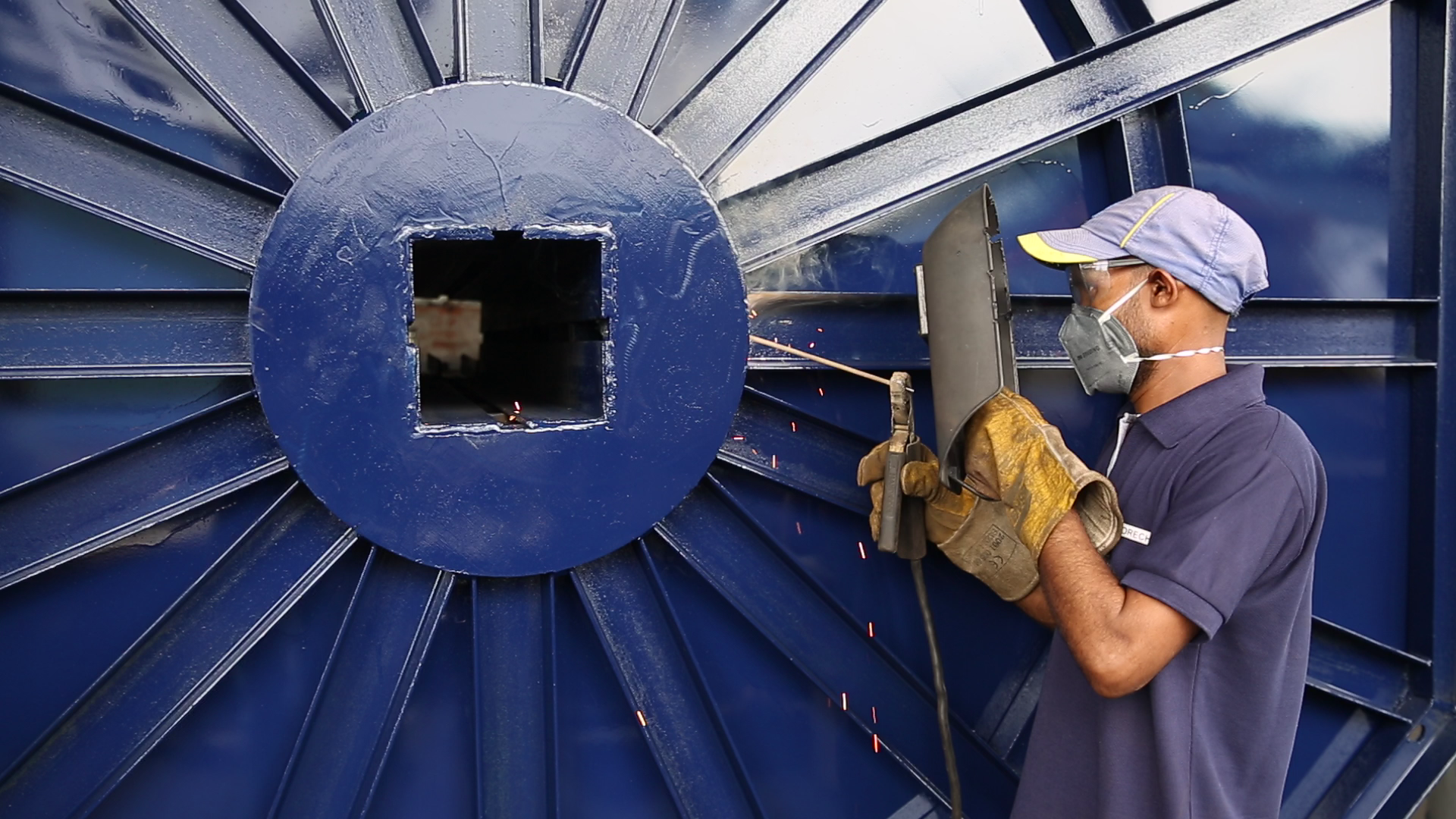
Si nécessaire, Forech peut également fabriquer sur place des fûts, des cages ou des boîtes d'emballage sur mesure pour le produit fini, afin de garantir que votre produit soit protégé des dommages pendant le transport et soit aussi facile que possible à décharger.