
Fabricación
Proceso
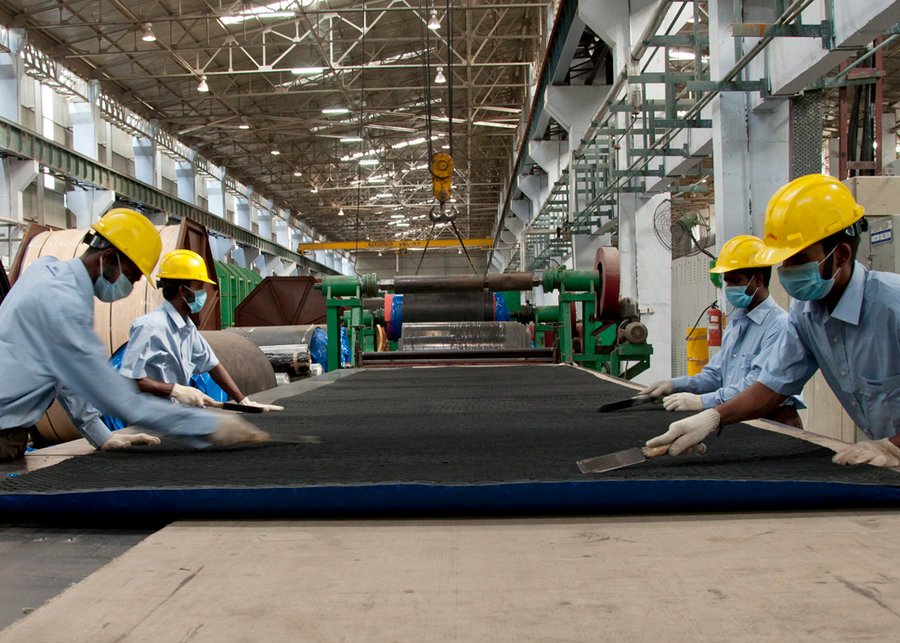
Cinco procesos distintos: Mezclado, Calandrado/Corte en láminas, Laminado, Curado e Inspección y embalaje del producto terminado.
Mezclando
Las distintas aplicaciones de los compuestos requieren una mezcla de compuestos personalizada.
Forech realiza pruebas periódicas con diversas materias primas para determinar su idoneidad según las necesidades del cliente; personaliza el procedimiento de mezcla y la fórmula para cumplir con los requisitos de la aplicación. A partir de ensayos de laboratorio y producción, se calcula la proporción ideal de materias primas, el tiempo de mezcla y los pasos necesarios.
Las líneas de mezclado automatizadas garantizan que el proceso de mezclado no se desvíe de la receta.
Cada lote que sale de la mezcladora lleva impreso un número de lote y se somete a pruebas de laboratorio antes de ser procesado posteriormente.
Calandrado / Despliegue
El compuesto que obtenemos de nuestra línea de mezclado viene en planchas gruesas de poco ancho. Para darle el ancho y grosor deseados, y para recubrir la tela si es necesario, lo pasamos por una calandra o una extrusora.
Las líneas de laminado controlan y ajustan la temperatura, la velocidad y el calibre para garantizar que la lámina o el tejido cauchutado tenga un grosor uniforme y esté libre de zonas sin cubrir. Durante cada configuración, un supervisor humano verifica el ancho y el grosor para asegurarse de que no haya desviaciones.
Forech también es capaz de producir caucho de recubrimiento con espesores de hasta 8 mm en una sola pasada, lo que reduce el riesgo de formación de ampollas o deslaminación durante el funcionamiento.
Laminado
Para las correas de tela, tomamos rollos individuales de tela cauchutada y los llevamos a una mesa de trabajo, los colocamos uno encima del otro y aplicamos una ligera presión para crear la estructura básica de la correa.
En esta máquina, tanto la cubierta superior como la inferior se colocan sobre la estructura de tela. La mesa de construcción también se utiliza para ensamblar cubiertas de caucho muy gruesas o láminas de revestimiento de caucho a partir de láminas más delgadas provenientes de la calandra. En esta etapa de fabricación, también se ensamblan en la cinta los interruptores, los bucles de sensores o cualquier otro componente adicional de la cubierta.
En el caso de las correas de cordón de acero, el laminado se realiza en línea, en una estación de compactación que deposita caucho en la parte superior e inferior de los cordones de acero, los cuales se mantienen bajo tensión.
Las piezas moldeadas se ensamblan en el propio molde.
Curación
Tras el montaje, la lámina, la cinta transportadora o la pieza moldeada ya ensambladas se llevan a una rotocuradora o a una prensa.
Se aplica calor y presión para asegurar que el caucho crudo experimente una reacción de vulcanización y adquiera su forma final.
Forech dispone de prensas y moldes especializados, adaptados al producto, su grosor, anchura y forma, para sus diferentes líneas de productos, que incluyen láminas de caucho, revestimientos de caucho perfilados, cintas transportadoras planas, cintas transportadoras perfiladas, revestimientos y almohadillas cerámicas, paredes laterales y tacos, y anillos tensores.
En cada línea de producción, se supervisan y controlan el tiempo de curado, la temperatura y la presión para garantizar el mejor acabado superficial posible y un producto sin defectos.
Inspección y embalaje
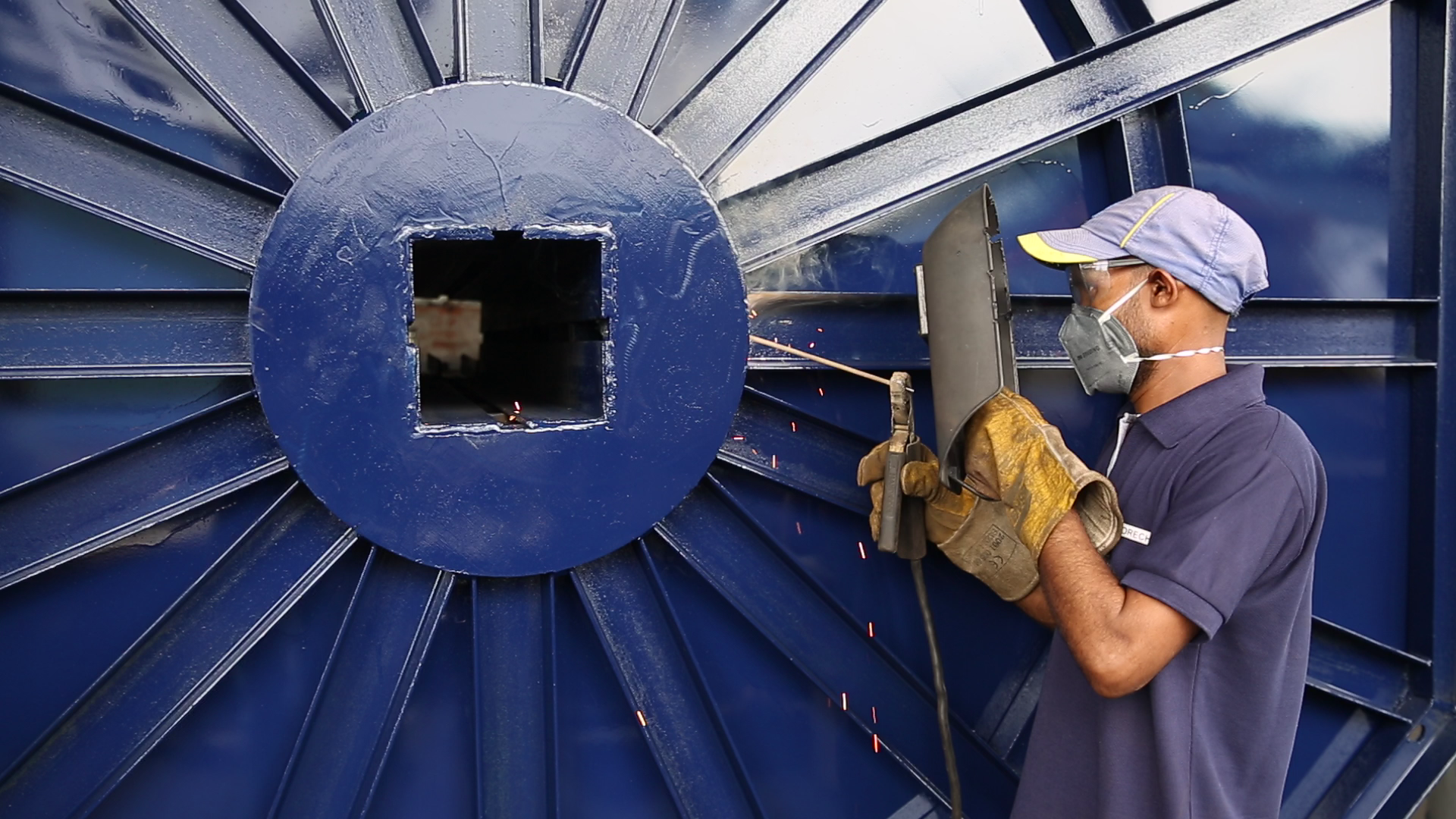
Una vez finalizado el proceso de curado, los productos terminados se cortan y recortan para eliminar los restos de caucho no deseados; y se someten a pruebas en nuestro laboratorio certificado a nivel nacional.
Forech puede realizar pruebas de resistencia y abrasión del caucho; resistencia total de la correa, propiedades ignífugas, propiedades resistentes al calor, así como la integridad dimensional; según los requisitos del cliente y del producto.
En caso necesario, Forech también puede fabricar bidones, jaulas o cajas de embalaje a medida para el producto terminado en sus instalaciones, para garantizar que su producto esté protegido contra daños durante el transporte y que su descarga sea lo más sencilla posible.